
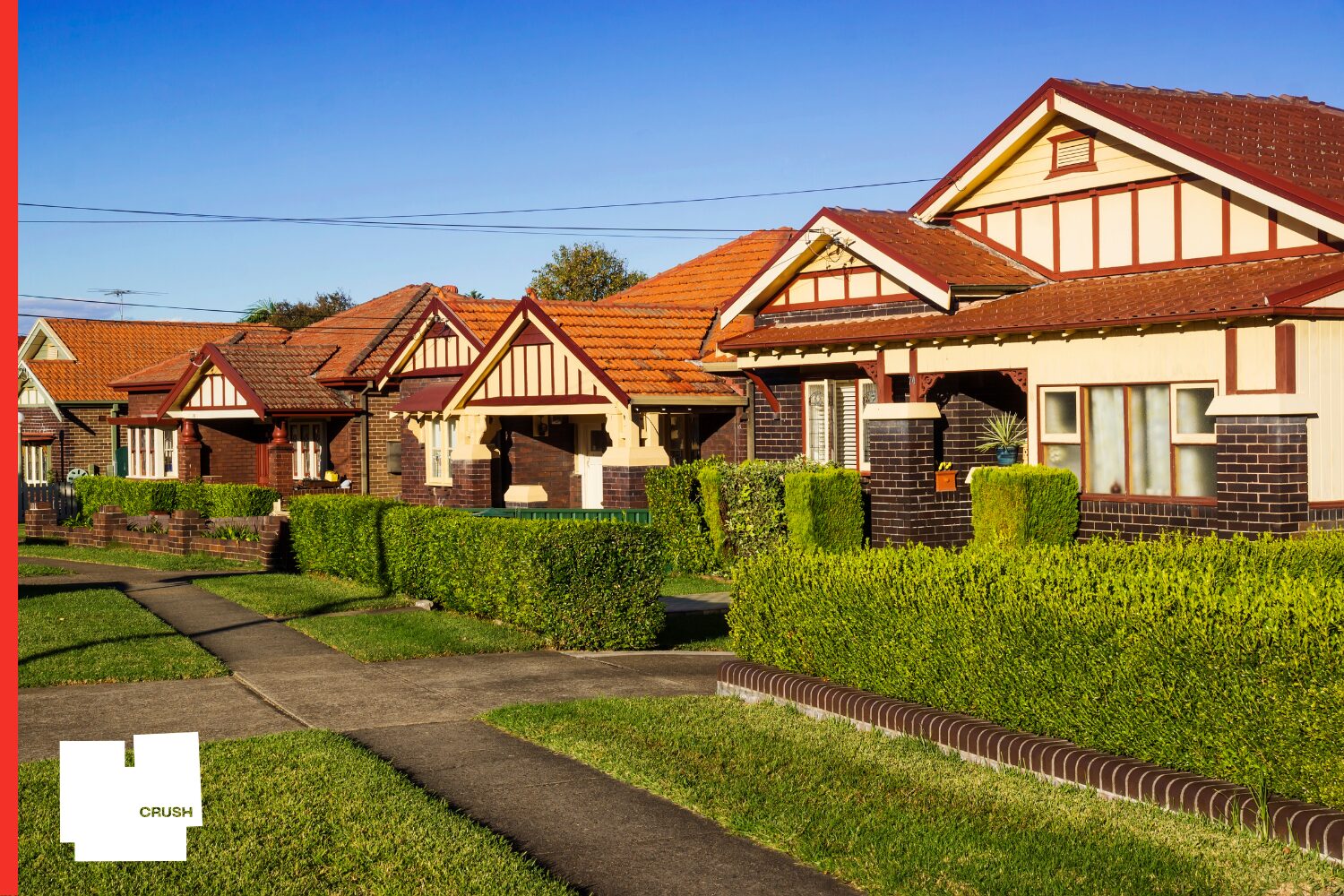

A Statement of Heritage Impact (SOHI) is a specialised report that examines how proposed works to a heritage item, or near to it, will affect the heritage value of a historic property, its surroundings, or a conservation area.
Sometimes referred to as a Heritage Impact Statement, it is an assessment report generally carried out by qualified heritage consultants, such as heritage architects, specialised town planners, or cultural heritage experts, on behalf of the developer or a property owner. The primary purpose of a Statement of Heritage Impact (SOHI) is to systematically evaluate how a proposed development or renovation may impact the item’s heritage values or those of nearby heritage structures.
A detailed and properly conducted Statement of Heritage Impact answers three important questions for approval authorities, such as a department of planning or local council:
- Why is the site of significant heritage? This element of the SOHI looks at the historical, architectural, cultural or social significance of the site.
- How does the proposed project impact it? Here the Statement of Heritage Impact assesses the exact intended works, such as renovations, demolition or colour changes, and evaluates the visual and physical implications.
- How are impacts moderated or reduced? The purpose here is to demonstrate how the planned works values the property’s character and outlines measures to minimise any negative outcomes.
When is a Statement of Heritage Impact required?
A Statement of Heritage Impact (SOHI) is required as part of a planning permit or Development Application (DA) whenever the planned works or alterations of use have the capacity to impact the cultural significance of a heritage-listed property, its setting, or the surrounding area.
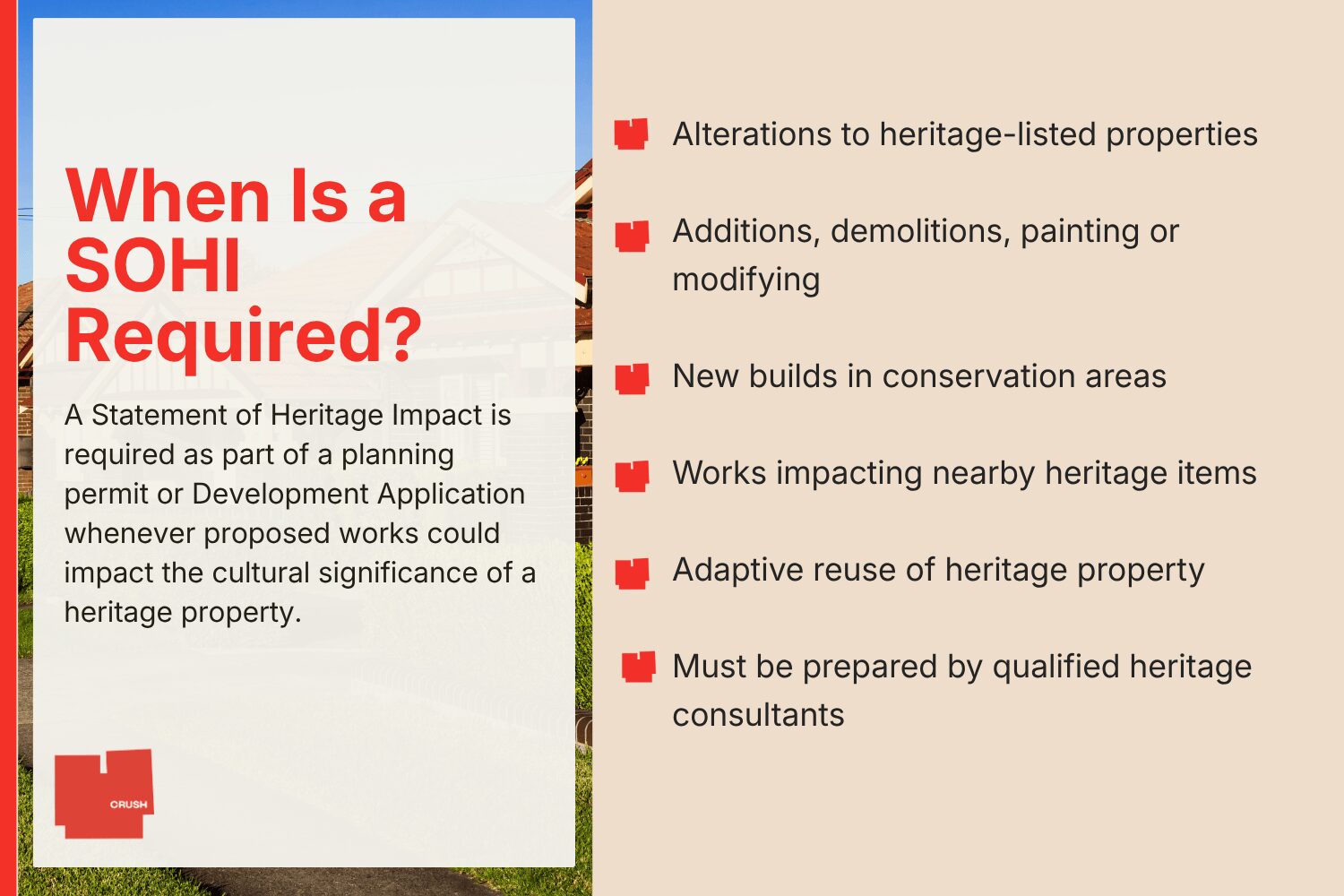
Generally, a Statement of Heritage Impact is required when alterations are proposed to a heritage-listed property. These alterations can be in the form of additions, demolitions, painting or modifying the property. A SOHI also may be necessary for a new construction or modifications made to a building that sits within a Heritage Conservation Area (HCA).
Similar to this is the potential requirement from planning authorities for a SOHI should they believe there is potential for the planned works to impact the historical setting or character of a nearby heritage item. Another time when a Statement of Heritage Impact could be required is when an application is made for the adaptive reuse of a heritage property, such as changing an historic residence into a commercial space.
Who is responsible for preparing a Statement of Heritage Impact?
The person or people responsible for preparing a Statement of Heritage Impact is a qualified heritage consultant, heritage architect, specialised town planner or cultural heritage expert.
To ensure your Statement of Heritage Impact meets the necessary approval requirements, the consultant or expert you engage must fulfil the criteria set by your local authority, such as the NSW Heritage Council. A properly qualified consultant will ensure the proposed works are in compliance and alignment with relevant legislation, planning controls, and conservation policies.
What you’ll need when submitting a Statement of Heritage Impact
A thorough and properly prepared Statement of Heritage Impact will generally contain the following details:
- A detailed site description and site history, with an overview of the location and its background.
- Heritage significance assessment evaluating the cultural, historical, social and aesthetic importance of the site.
- A detailed breakdown of the proposed works. This may also include how heritage constraints have been addressed.
- An impact assessment of how the planned works may affect the physical, social or historical value of the property. The impacts can be both positive and potentially negative.
- A thorough assessment of what measures have been taken to mitigate or reduce potential negative outcomes on the heritage site.
There will also be various supporting documents that are required, including detailed architectural plans, photographic evidence of the space and surrounding area, as well as potentially the need for specialist reports from arborists, landscape architects, engineers or an Aboriginal Cultural Heritage Assessment.

Who approves Statement of Heritage Impact submissions & how long does it take?
As a Statement of Heritage Impact (SOHI) is a supporting report submitted as part of a development or building application, the approval process depends on the overall DA – and how long an approval takes can vary greatly. The average approval time ranges from 40 to 90 days, but it can take much longer if your works are significant.
The assessment of a Statement of Heritage Impact is carried out by the relevant consent authority, and who that is depends on the level of the heritage listing and your area. For properties listed on a council’s Local Environmental Plan (LEP) or within a Heritage Conservation Area (HCA), your local city or shire council will assess your SOHI and approve or reject it as part of your Development Application (DA). If the property is on a state register (e.g. the NSW State Heritage Register) the state’s heritage council or department will be the consent authority.
Final thoughts
A Statement of Heritage Impact is an important document that helps maintain the history, culture and aesthetic of our urban environment. It may seem like a complicated and difficult report to prepare, but with the right consultant or heritage expert that is experienced in the process, it can be relatively straightforward. Many of the required documents, such as engineering and architectural plans, are part of a normal DA application. While there are some additional hoops to jump through, a qualified consultant will be able to navigate the process.
July 28, 2026
Created to help you clarify what matters most in your heritage home before making decisions that can’t be undone.
A calm guide to understanding your options and how to begin, with care.
Receive the Heritage Home Design Workbook
The Design
Workbook for
Heritage Homes
the free guide
DOWNLOAD HERE