
read the post
Bacteria in a test tube were fooled by endless space, we too take Earth's resources for granted. Engineering solutions are underway, but sustainability should be our priority.
Sustainability The Clock Is Ticking
Welcome to the blog

Yes, heritage architects exist. Here’s what the title actually means, what it doesn’t, and why the difference matters more than your DA. You may have read recently that “heritage architect” isn’t a real qualification – that the title doesn’t exist, and that heritage expertise really comes down to two things: a portfolio of past projects […]
read the post —
Terrace houses are one of the most common residences in Sydney, saturated in centrally-located inner pockets of Sydney like Paddington, Surry Hills, Darlinghurst, Glebe, Newtown and Balmain. A terrace house is uniquely characterised by narrow, Victorian- and Edwardian-era style architecture, dating back to the end of the 19th Century. As beautiful and charming as a […]
read the post —
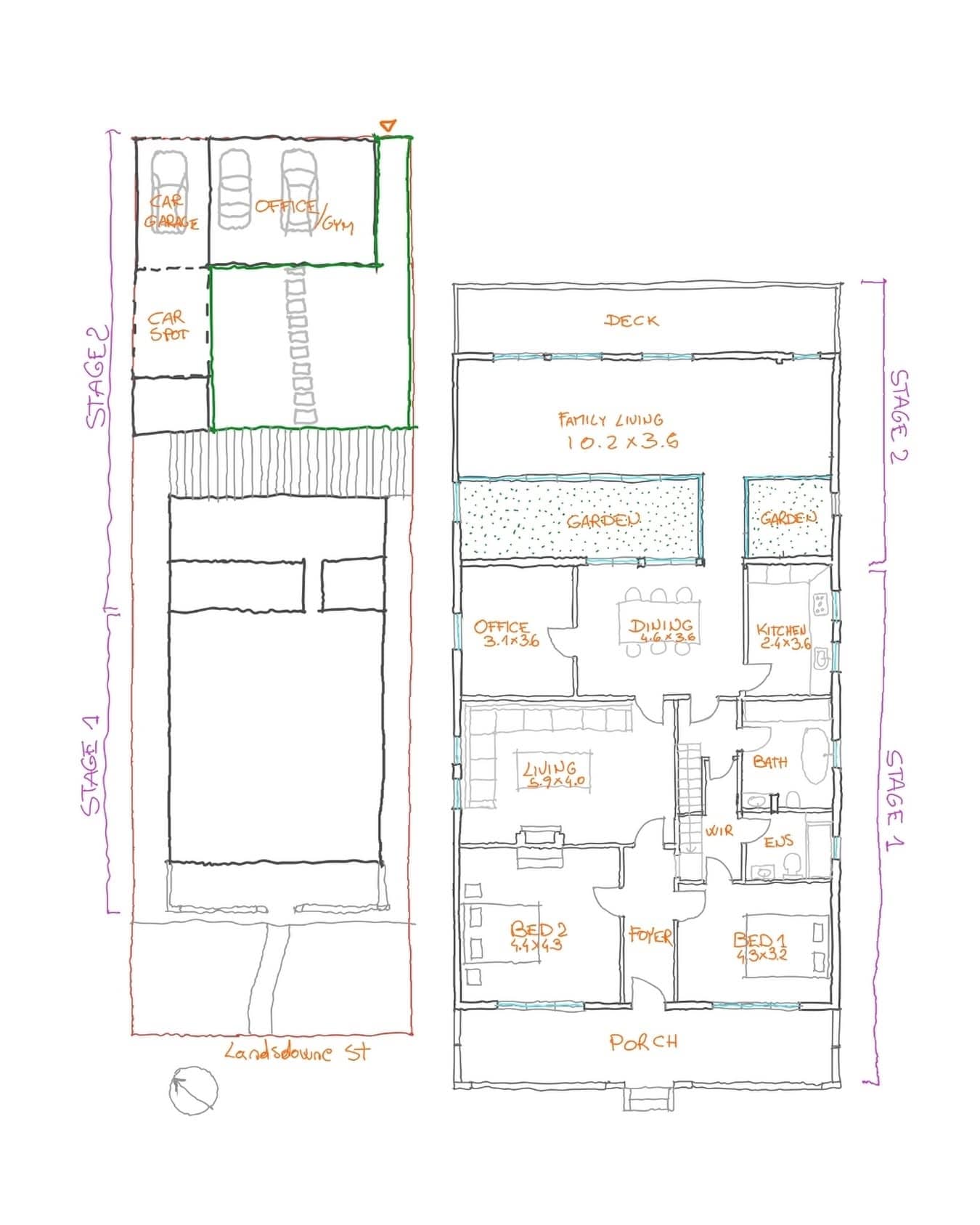
When planning a home renovation or a new build, one of the first considerations is whether to hire an architect or a draftsman to help design and conceptualise the construction. Both architects and draftsmen can provide the blueprints for a residential build, but each offers a different level of service. Understanding the difference between hiring […]
read the post —
A renovation for your home or office, no matter how small, should never be underestimated in terms of complexity – there are many more moving parts than most realise, from design, to flow, and structural considerations. According to the 2023 Houzz & Home Study for Australia, finding the right service providers for a home renovation […]
read the post —

Renovating a heritage property is a grand undertaking – as a heritage homeowner, you have the privilege and responsibility of preserving the character and historical elements of the property, while writing the chapter that belongs to you. Naturally, this responsibility comes with greater considerations in terms of finances, permissions, and architectural design. Renovating a heritage […]
read the post —
When you build or renovate in New South Wales you will typically be required to have your plans approved in the form of a Development Application (DA) or Complying Development Certificate (CDC). The nature and extent of works will determine whether a Complying Development Certificate (CDC) or Development Application (DA) is required. In this article, […]
read the post —

Federation architecture has a special place in Australian history. Clad in brick and timber, Federation-style homes and buildings can be found across Australia, particularly in inner-city suburbs of Sydney, Melbourne, and Brisbane. As heritage architects in Sydney who have worked on renovations, extensions, and overhauls for Federation-era homes, we’ve put together this guide to help […]
read the post —
What is Adaptive Reuse in Architecture? Adaptive reuse is a sustainable architecture approach that aims to preserve the use of resources in the construction of new buildings. The approach is designed to minimise demolition work on existing buildings, focusing on adapting the existing structure for new purpose through architectural design. Adaptive reuse is not a […]
read the post —

Heritage properties in Sydney are a prominent part of the city’s history. To protect and preserve the value of all heritage properties and spaces in Sydney, there are strict regulations on the work that can be done on new and existing dwellings. As the new Transport Oriented Development (TOD) planning reforms are being rolled out […]
read the post —
As of 13 May 2024, the NSW Government has rolled out new planning controls for new housing under the Transport Oriented Development (TOD) planning reforms. The TOD planning reforms aim to fast track new housing developments around public transport hubs, creating liveable and vibrant spaces with increased housing. For developers, land owners and investors, the […]
read the post —
Created to help you clarify what matters most in your heritage home before making decisions that can’t be undone.
A calm guide to understanding your options and how to begin, with care.
Receive the Heritage Home Design Workbook
The Design
Workbook for
Heritage Homes
the free guide
DOWNLOAD HERE